
How to Prepare for Behavioral Interviews at FAANG and Top Tech Companies
A practical, story-first framework to communicate judgment, ownership, and leadership under pressure

Technical interviews evaluate whether you can solve problems and derive solutions.
Behavioral interviews assess whether you can be trusted to solve the right problems when the context is complex, the information is incomplete, and the stakes are high.
This is where many strong candidates quietly lose momentum in FAANG and top-tier tech interviews, not because they lack experience, but because they fail to translate that experience into structured, credible stories that interviewers can clearly evaluate.
Behavioral rounds are not informal conversations.
They are carefully designed signals of how you think, decide, disagree, recover, and lead.
This guide is designed to help you prepare properly for them.
✨Start With One Non-Negotiable Rule: Use the STAR Method for Every Answer
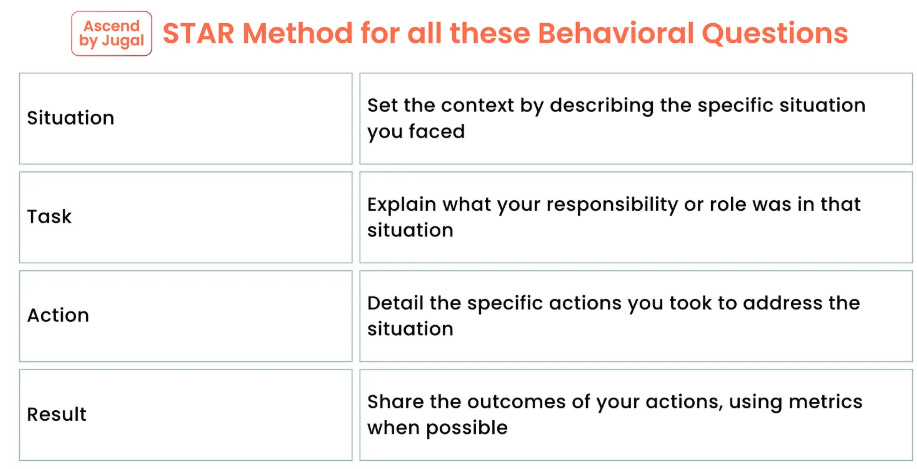
No matter which company you interview with, every behavioral response should follow the same underlying structure, because this is the structure interviewers are trained to listen for.
You should always frame your answer by briefly explaining the situation you were in, clearly stating the task or responsibility you owned in that moment, walking through the specific actions you personally took, and finally closing with the result, ideally supported by numbers, outcomes, or observable impact.
When practiced correctly, a complete answer should take two to three minutes, long enough to demonstrate depth and judgment, but short enough to remain focused and intentional rather than rambling or defensive.
Before interviews, aim to prepare six to seven strong, reusable stories that can be adapted across different questions and companies.
The question may change, but the underlying story often does not.
🤝🏻Amazon:- Bar Raiser Behavioral Round
Evaluating ownership, judgment, and decision-making under pressure
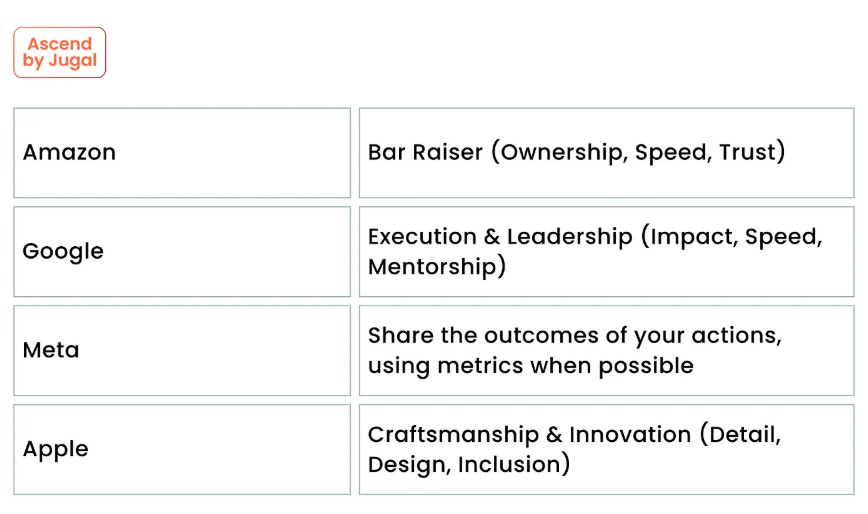
Amazon’s behavioral interviews are anchored deeply in its Leadership Principles, and every question is designed to understand how you act when outcomes matter and trade-offs are unavoidable.
You should expect questions that ask you to describe moments where you took ownership beyond your formal role, respectfully disagreed with a manager using data and reasoning, or made a difficult decision with limited information while still committing to action.
You will also be asked about failures, not to test perfection, but to understand whether you learn, adjust, and take accountability without deflecting responsibility.
Other common themes include earning trust over time, taking calculated risks, mentoring others, improving broken processes, managing competing priorities, challenging outdated systems with tact, staying customer-focused, delivering under pressure, acting quickly when speed mattered, and escalating issues early to prevent larger failures.
What Amazon is ultimately assessing is not whether you always made the right call, but whether you owned the outcome, demonstrated sound judgment, and evolved as a result.
🔜 Google:- The “Googliness” Interview
Assessing curiosity, collaboration, and adaptability in complex environments
Google’s behavioral interviews focus less on hierarchy and more on how you operate within diverse, intellectually curious, and often ambiguous team environments.
Expect questions that explore how you collaborate with people very different from you, how quickly and effectively you can learn unfamiliar domains, and how creatively you approach problems when obvious solutions fall short.
You may be asked to describe situations where you influenced others without formal authority, changed someone’s mind through reasoning and empathy, or navigated conflict while preserving trust and momentum.
Google also places strong emphasis on resilience, how you respond to ambiguity, failure, tough feedback, ethical dilemmas, and moments where you feel out of place but still find a way to contribute meaningfully.
Strong answers here demonstrate humility, openness to feedback, intellectual honesty, and a genuine desire to learn rather than simply to win.
👉🏻Meta:- Execution and Leadership Interviews
Measuring speed, ownership, and the ability to move from decision to impact
Meta’s behavioral interviews heavily reward candidates who show bias for action, clarity in prioritization, and the ability to execute quickly without losing control or accountability.
You should be prepared to discuss projects you owned end-to-end, decisions you made without complete information, and moments where you had to disagree with a team or leader to unblock progress.
Expect questions around missing goals, receiving feedback, influencing leadership, scaling systems rapidly, mentoring others, measuring impact meaningfully, and knowing when to say no in order to protect long-term outcomes.
Meta is not looking for recklessness, but for people who can move fast, learn quickly, and adjust without ego when reality changes.
🔥 Apple:- Collaboration, Craft, and Product Thinking
Understanding how you balance innovation, quality, and user experience
Apple’s behavioral interviews tend to emphasize how deeply you care about the work itself- how products feel, how teams collaborate, and how details are refined over time.
You will likely be asked about working cross-functionally, improving product experiences, maintaining quality under tight deadlines, handling rejected ideas, and navigating conflicting design opinions with respect and evidence.
Apple also values stories around accessibility, inclusivity, receiving difficult feedback, simplifying complex problems, shipping imperfectly when needed, and continuously incorporating feedback into your creative or technical process.
When discussing Apple products, thoughtful analysis matters far more than enthusiasm.
They are looking for candidates who understand why things are designed the way they are.
✨How to Practice Effectively (This Is Where Most Candidates Fall Short)
Behavioral preparation is not about memorizing answers; it is about developing clarity under pressure.
You should practice answering aloud, record yourself, listen back critically, and refine your stories until they feel natural, focused, and confident without sounding rehearsed.
If you can explain a difficult decision calmly, honestly, and with structure, you are ready.
Final Thought
Behavioral interviews are not about saying the perfect thing.
They are about demonstrating how you think, decide, recover, and lead when outcomes are uncertain.
When your stories are clear and grounded in real experience, interviewers don’t have to guess who you are.
They can see it.
Good luck.
Until next time,
Jugaldb.